Air Pollution Control Measures In Industrial Centers


1. The emission rates should be restricted to permissible levels by each and every industry. 

 2. Incorporation of Air pollution control equipment in the design of the plant layout must be made  mandatory.

 3. Continuous monitoring of the atmosphere for the pollutants should be carried out to know the emission levels.

Equipment used to control air pollution:

Air pollution can be reduced by adopting the following approaches.

i) To ensure sufficient supply of oxygen to the combustion chamber and adequate temperature so that the combustion is complete, eliminating much of the smoke consisting of party burnt ashes and dust. 

ii)To use mechanical devices such as scrubbers, cyclones, bag houses and electro - static precipators, reducing particulate pollutants. 


1) electrostatic precipitator 


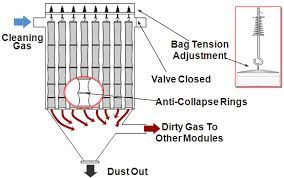
2)Baghouse filter


3.)Cyclone Separator 


4.) Wet scrubber 

The tools in pictures are commonly used control methods for removing particulates from the exhaust gases of electric power and industrial plants. All these methods retain hazardous materials that must be disposed of safely. The wet scrubber can also reduce Sulphur oxide emissions. 

iii) Chemical Treatment to deal with factory fumes. 

The disposal of the collected air pollutants is equally important for successful control of air pollution. 


Comments

Popular posts from this blog

TOP POLLUTION RECORDED IN WORLD

CHERNOBYL NUCLEAR DISASTER (NUCLEAR POLLUTION) :  In April 26,1986, the melt down of the Chernobyl nuclear reactor , in Russia, has leaked out the radioactive rays and radioactive materials.   Effects : 1. In this Pollution nearly 2000 persons have been killed by the accident. 2. People suffered due to the illness such as, degeneration of the cells, severe bleeding, anemia, skin cancer. 3. Animals, Plants are also affected by nuclear radiation.  MINAMATA EPIDEMIC (1953) : MARINE POLLUTION ( CASE STUDY ) Minamata is a small coastal village in Japan. The Chisso Chemical Company , which produces vinyl polymer plastics used organomercurial compound. The industry released its effluent into Minamata sea. The effluent containing mercury ions is converted into methyl mercury, which is highly toxic.  The marine organisms like phytoplankton and zoo-planktons easily absorb the toxic methyl mercury compound. These organisms are consumed by small fishes and these are in ...

ELECTRICAL COMPARATORS AND ITS WORKING

Electrical Comparators are used as a means of  detecting and amplifying small movements of a work contacting elements. An electrical comparator consists essentially of  a pick-up head or transducer for converting a displacement into a corresponding change in current and a meter or recorder connected in the circuit to indicate the electrical change, calibrated to show in terms of displacement. Generally, an amplifier is needed to provide the requisite sensitivity and to match the characteristics of different parts of  the circuit. Electrical comparators can be classified according to the electrical principle used in the pick-up head. Most of the comparators use either a differential transformer, an inductance bridge, a strain gauge or a capacitor as a means of detecting movement of the gauging element. There are different types of  electrical comparators. One kind called an electrolimit gauge is used to check or measure the outside diameter of a  roll. The objec...

MELTING FURNACES FOR FERROUS METALS : CUPOLA AND ITS WORKING

Various types of melting furnaces are used in different foundry shops, depending upon the quantity of metal to be melted at a time, and the nature of work that is carried out in the shop.  The primary objective in cupola is to produce iron of desired composition, temperature and properties at the required rate in the most economical manner. Besides, this furnace has many distinct advantages over the other types, e.g., simplicity of operation, continuity of production, and increased output coupled with a high degree of efficiency.  Description Of a Cupola : The Cupola Furnace consists of a vertical, cylindrical steel sheet, 6 to 12 mm thick, and lined inside with acid refractory bricks or acid tamping clay. The refractory bricks or the tamping clay used consist of  silicon oxide acid (SiO2) and alumina (Al2O3). The lining is generally thicker in the lower where the temperatures encountered are higher than in the upper region. The shell is mounted either on a brick work fo...